Leider erwischt es Julien vor einigen Tagen. Einen Zehennagel, der schon länger gedrückt hat, schneidet er zu kurz zurück. Ihr ahnt es vermutlich schon – das geht nicht gut aus.
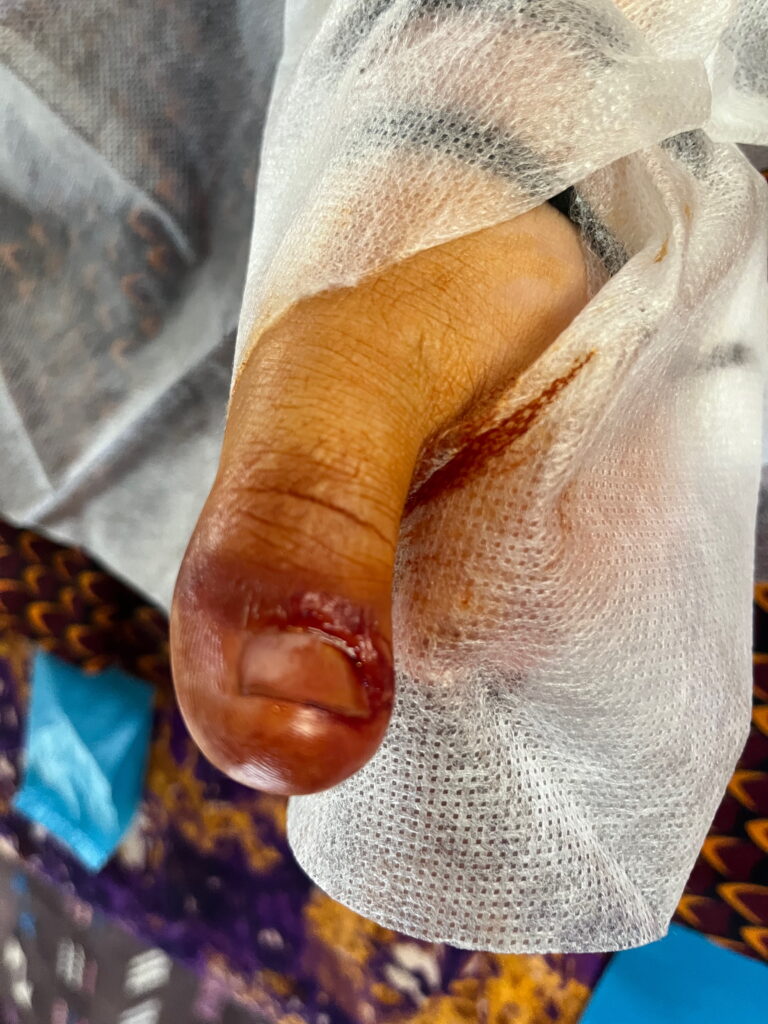
Zum Glück kein Fieber. Trotzdem: pas bon. Er hat Schmerzen, und es sieht alles andere als gut aus. Wahrscheinlich haben sich Bakterien in der Gegend des zu kurz geschnittenen, drückenden Zehennagels ausgebreitet. Eine Woche lang baden wir den Fuss zweimal täglich, desinfizieren, betäuben, dazu einige Tage Ibuprofen. Schnell wird klar: So einfach wird das nicht von selbst wieder gut.
Einen Arzt gibt es hier keinen. Und ins Kabinett der infirmière militaire – dort war ich schon einmal mit jemandem von hier – kommt nicht infrage. Die hiesige Methode, zwei halten das Kind fest und der Dritte drückt, passt ganz bestimmt nicht zu uns.
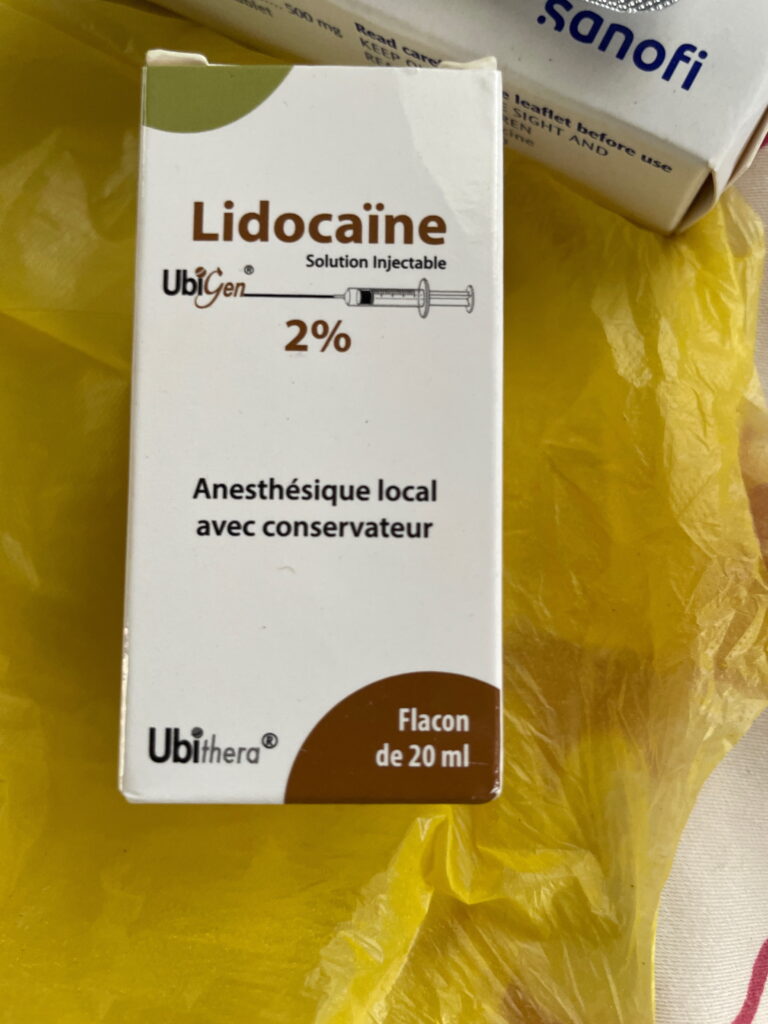
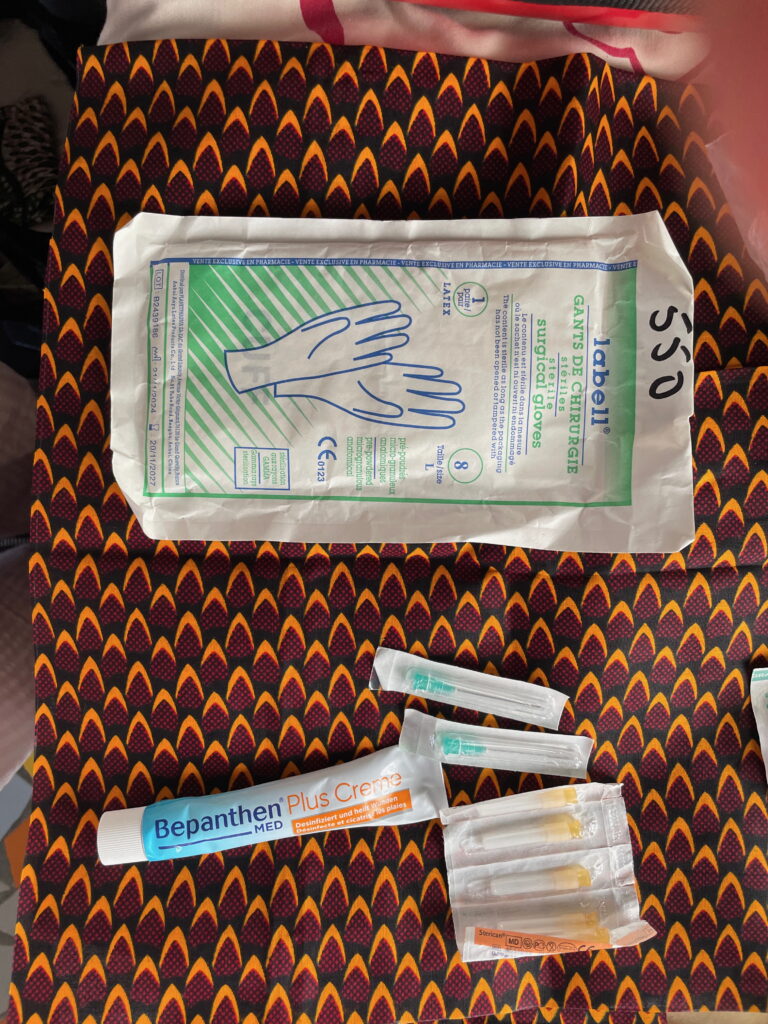
Zum Glück kann ich mir Rat holen und finde eine Lösung. Ein Freund und Familienmitglied, Tierarzt von Beruf, hilft uns weiter und organisiert die nötigen Medikamente aus der Apotheke. Alles liegt bereit: Medikamente, Spritzen.
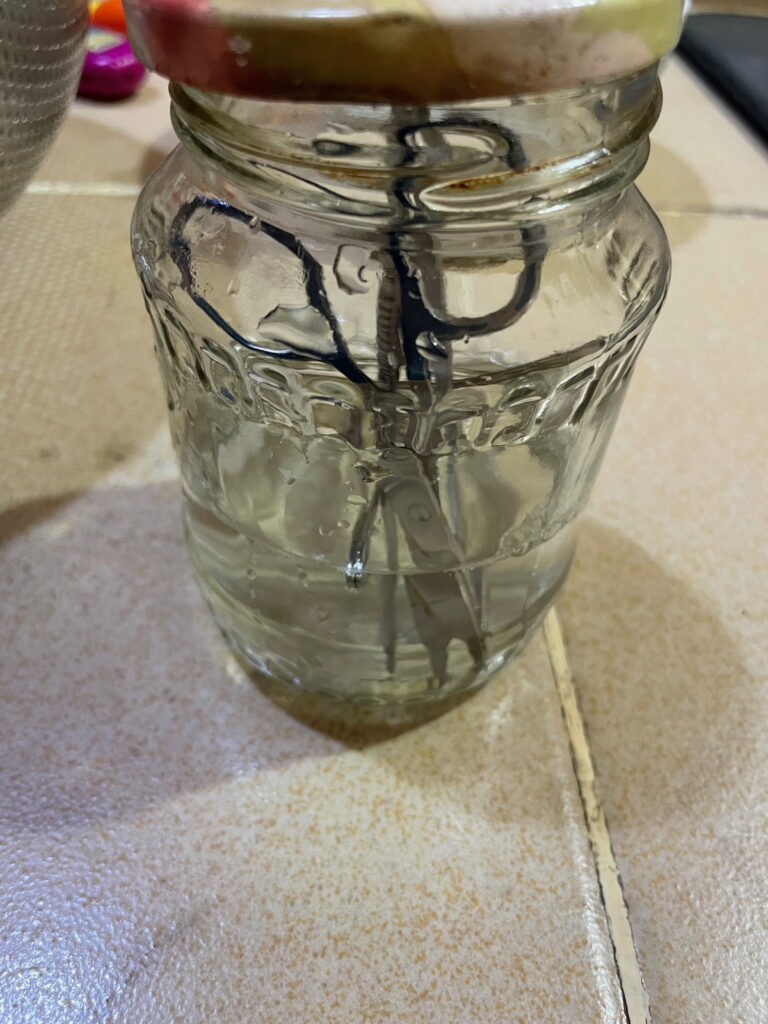
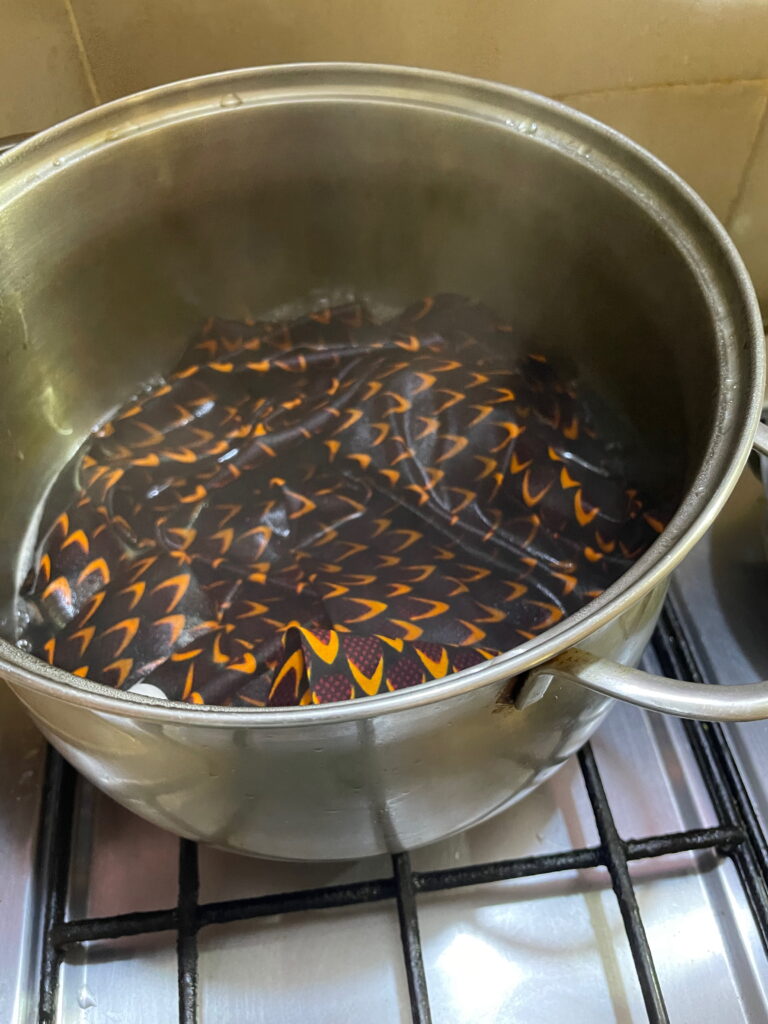
Die Instrumente desinfiziere ich zuerst mit Javelwasser, danach koche ich sie aus. Auch Tücher werden ausgekocht und bereitgelegt. Unsere Reise- und Hausapotheke wird geplündert, ebenso unsere Notfallreserve – Spritzen und ein kleines Skalpell.
Dann geht es los.
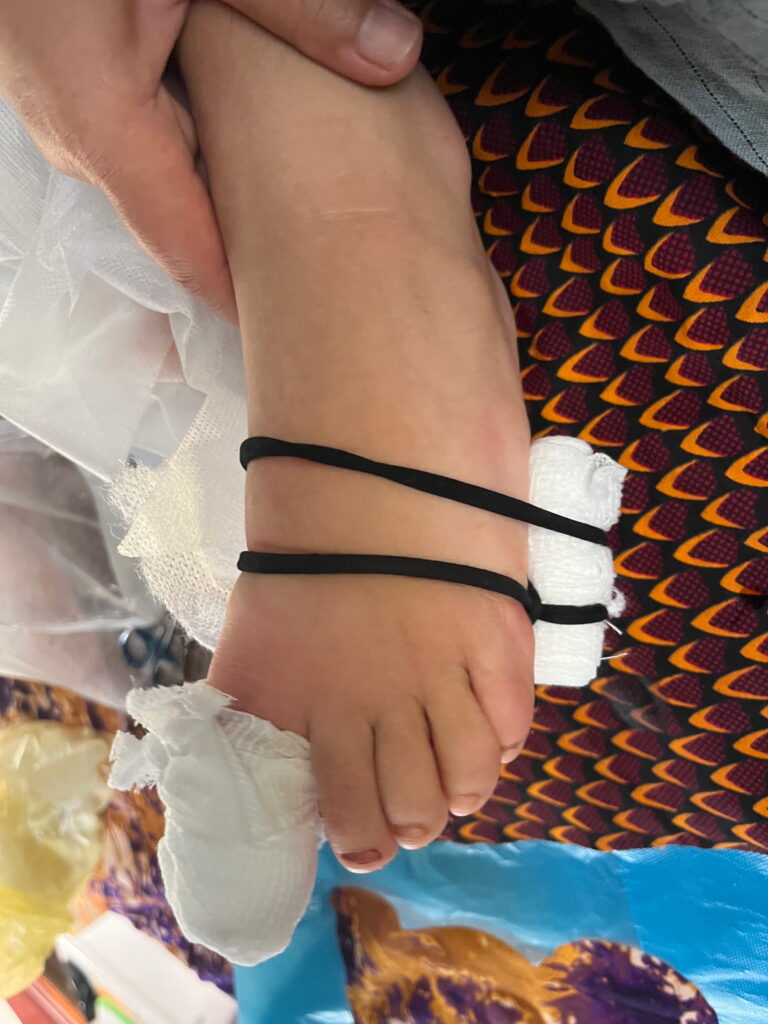
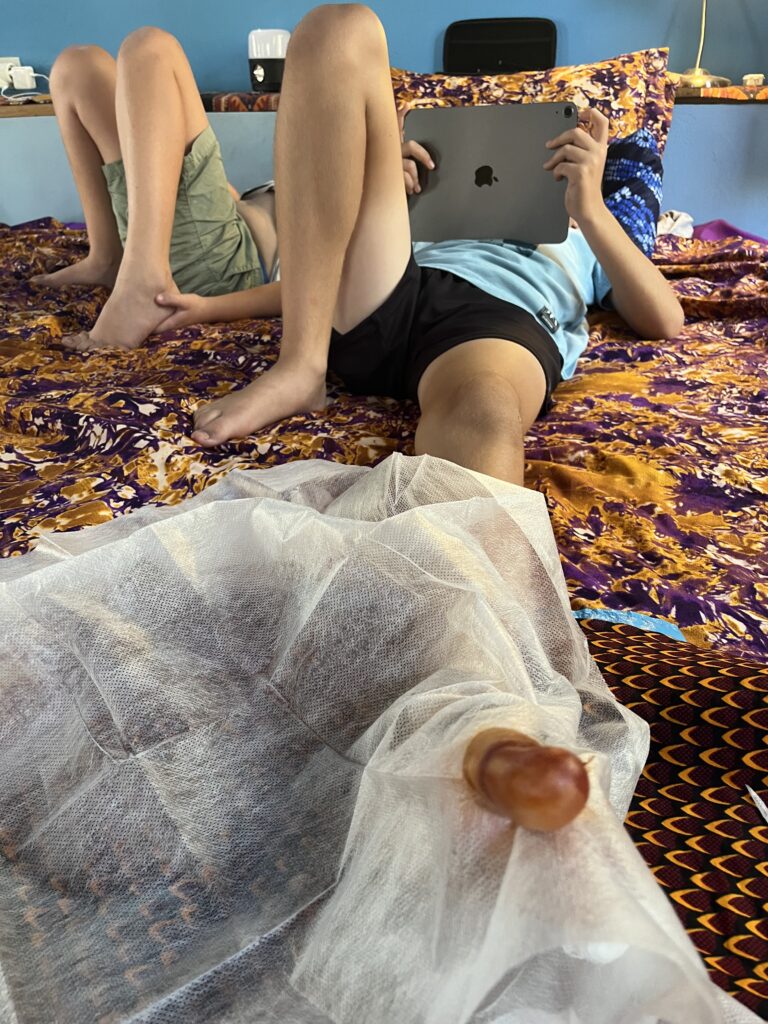
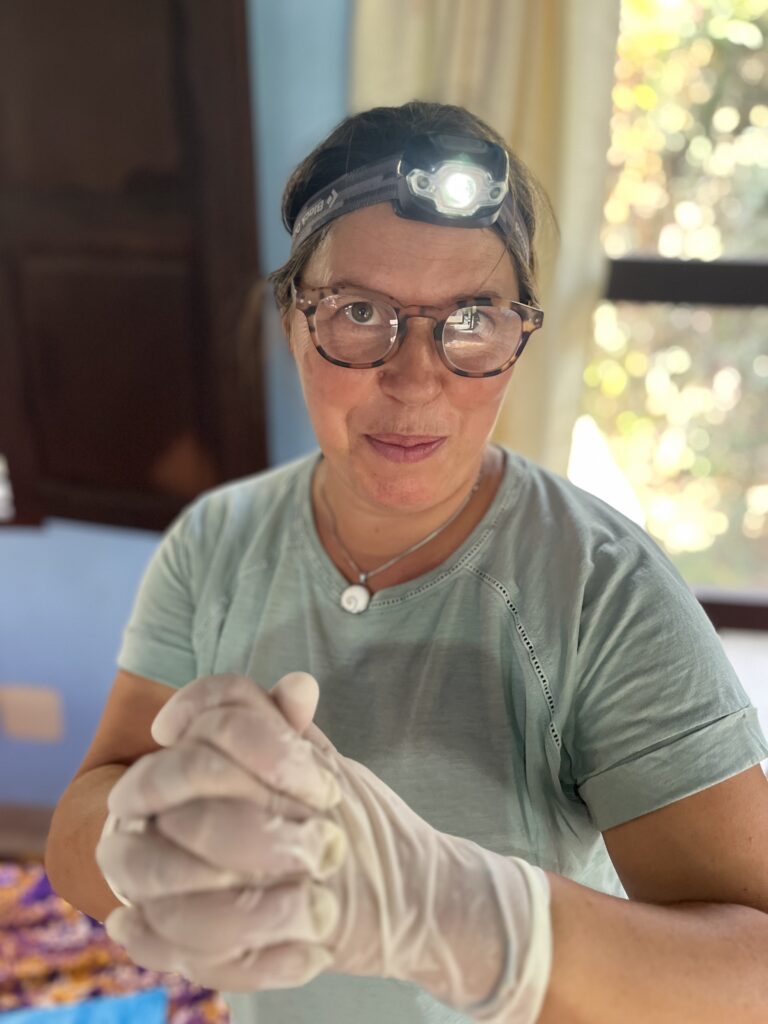
Wir richten uns im Zimmer ein, dort gibt es wenigstens keine Fliegen. Das Bett wird zum OP-Tisch. Ich mit Lesebrille und Stirnlampe, die Assistenten Yann und Lolo stehen bereit. Ich setze eine ringförmige Lokalanästhesie, um den Blutfluss zu reduzieren, und bringe zwei Haargummis um Juliens Fuss an.
Julien bekommt das Tablet in die Hand und wird mit Zeichentrickfilmen abgelenkt. Der Fuss wird mit Lidocain betäubt. So kann ich die Wunde spülen und den Nagel bearbeiten – genau die kleine Ecke zurückschneiden, die am Ende der Stein des Anstosses war.
Zum Schluss ein Verband. In den folgenden drei Tagen wird der Fuss weiterhin gebadet und regelmässig neu verbunden. Und dann – endlich – heilt alles wieder ab.
Vielen Dank an alle Beteiligten.
Jetzt, da der Fuss wieder auf dem Weg der Besserung ist, können wir langsam weiterziehen. Eine Tour weiter nach Süden steht an, zu den Mangroven der Casamance. Wir freuen uns schon darauf.
⸻
Unfortunately, Julien is affected a few days ago. A toenail that had been causing pressure for some time is cut too short. You can probably guess what happens next – it does not end well.
Before the burglary, we take a short trip to Gambia. For the first time in a long while, Julien wears closed shoes. On the way back, his foot becomes badly inflamed. It starts as a small, clearly defined red spot and quickly turns into a large, swollen toe filled with pus.
Luckily, there is no fever. Still – not good. He is in pain, and it looks far from harmless. Bacteria have most likely spread around the area of the too-short, pressure-sensitive toenail. For a week, we soak the foot twice a day, disinfect it, numb it, and give ibuprofen for several days. It soon becomes clear that this will not resolve itself easily.
There is no doctor here. And going to the military nurse’s clinic – where I have already been with a family member – is out of the question. The local method, where two people hold the child down while a third one presses, is definitely not for us.
Fortunately, I can ask for advice and find a solution. A friend and family member who is a veterinarian helps us and arranges the necessary medication from the pharmacy. Everything is prepared: medication, syringes.
The instruments are first disinfected with bleach and then boiled. Towels are boiled and laid out. Our travel and home first-aid kits are emptied, along with our emergency reserve – syringes and a small scalpel.
Then we begin.
We set up in the room, where at least there are no flies. The bed becomes the operating table. I wear reading glasses and a headlamp; Yann and Lolo assist. I apply a ring-shaped local anaesthetic to reduce blood flow and place two hair ties around Julien’s foot.
Julien holds the tablet and is distracted with cartoons. The foot is numbed with lidocaine. This allows me to rinse the wound and treat the nail – cutting back the small corner that turned out to be the root of the problem.
A bandage is applied. Over the next three days, the foot is soaked and re-bandaged regularly. And then, finally, it begins to heal.
Many thanks to everyone involved.
Now that the foot is recovering, we can slowly move on. A journey further south awaits us, towards the mangroves of the Casamance. We are already looking forward to it.
⸻
Malheureusement, Julien est touché il y a quelques jours. Un ongle de pied qui le gênait depuis un moment est coupé trop court. Vous devinez sans doute la suite – cela ne se passe pas bien.
Avant le cambriolage, nous faisons une petite excursion en Gambie. Pour la première fois depuis longtemps, Julien porte à nouveau des chaussures fermées. Sur le chemin du retour, son pied s’enflamme fortement. D’abord un petit point rouge bien délimité, puis rapidement un gros orteil rouge, gonflé et rempli de pus.
Heureusement, pas de fièvre. Mais quand même – pas bon. Il a mal, et l’aspect n’est vraiment pas rassurant. Des bactéries se sont probablement propagées autour de l’ongle coupé trop court et soumis à la pression. Pendant une semaine, nous faisons des bains de pied deux fois par jour, nous désinfectons, nous anesthésions, avec quelques jours d’ibuprofène. Très vite, il devient clair que cela ne guérira pas tout seul.
Il n’y a pas de médecin ici. Et aller au cabinet de l’infirmière militaire – où je suis déjà allée avec un membre de la famille – n’est pas une option. La méthode locale, où deux personnes tiennent l’enfant pendant qu’une troisième appuie, ne nous convient absolument pas.
Heureusement, je peux demander conseil et trouver une solution. Un ami et membre de la famille, vétérinaire de profession, nous aide et organise les médicaments nécessaires à la pharmacie. Tout est prêt : médicaments, seringues.
Les instruments sont d’abord désinfectés à l’eau de Javel, puis bouillis. Les tissus sont également bouillis et préparés. Nous vidons la trousse de secours de voyage et celle de la maison, ainsi que notre réserve d’urgence – seringues et petit scalpel.
Puis on commence.
Nous nous installons dans la chambre, où il n’y a au moins pas de mouches. Le lit devient la table d’opération. J’ai des lunettes de lecture et une lampe frontale, Yann et Lolo assistent. Je pratique une anesthésie locale en anneau pour réduire le flux sanguin et place deux élastiques autour du pied de Julien.
Julien tient la tablette et se calme avec des dessins animés. Le pied est anesthésié à la lidocaïne. Je peux alors nettoyer la plaie et traiter l’ongle – couper cette petite portion qui s’avère être la véritable cause du problème.
Un pansement est posé. Les trois jours suivants, le pied est encore baigné et régulièrement rebandé. Et enfin, la guérison commence.
Un grand merci à toutes les personnes impliquées.
Maintenant que le pied est sur la bonne voie, nous pouvons doucement reprendre la route. Une excursion plus au sud nous attend, vers les mangroves de la Casamance. Nous nous en réjouissons déjà.
⸻